
Water Treatment Plant (WTP)
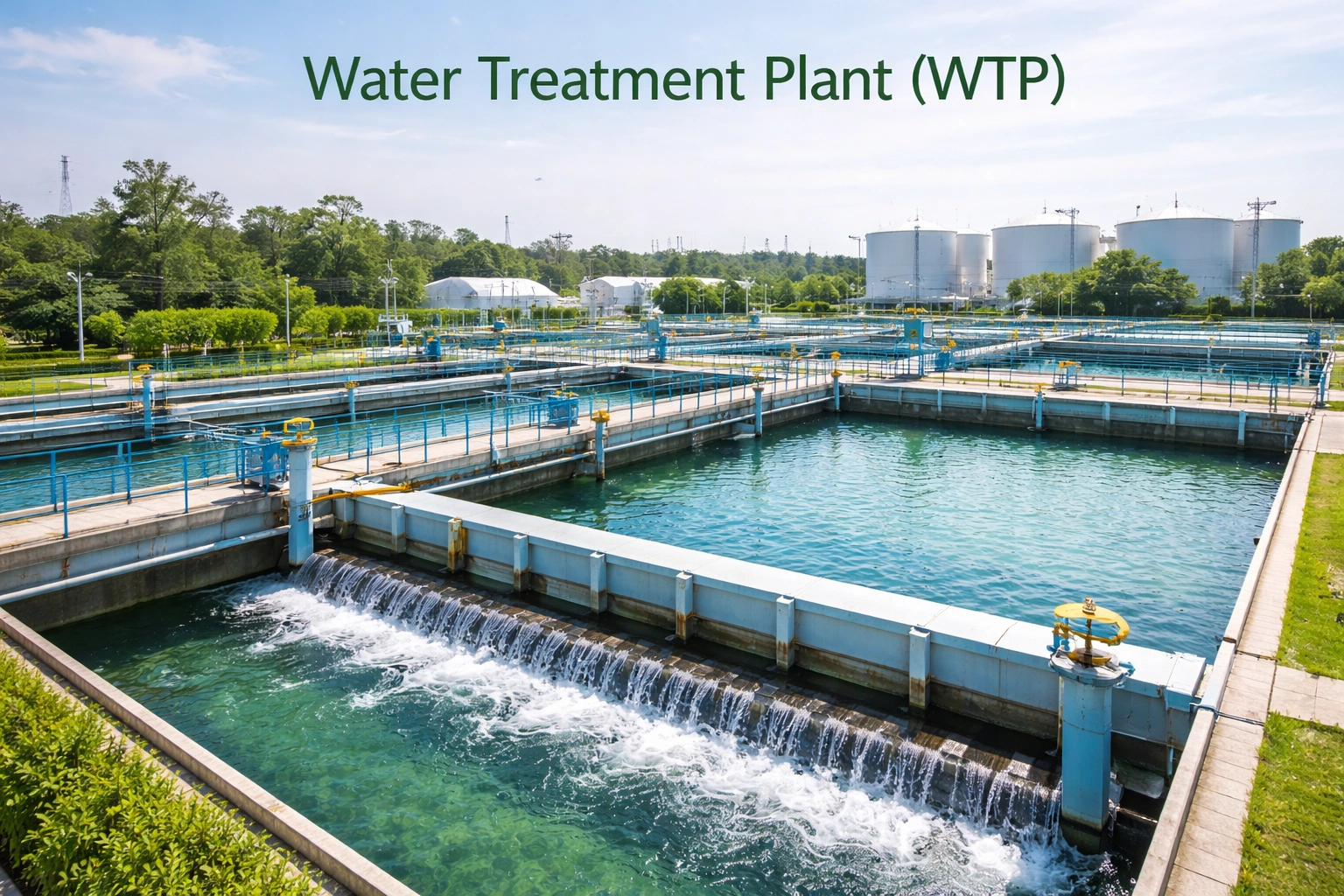
Wastewater Engineering Services for Water Treatment Plant (WTP) in Bangladesh
An Effluent Treatment Plant (ETP) treats industrial wastewater to remove pollutants before discharge. It uses processes like filtration, chemical treatment, and biological treatment to ensure environmental compliance and safety.
For top-notch consultancy services across Bangladesh—especially in Dhaka, Chittagong, Gazipur, Sylhet, Rangpur, Barisal, Khulna, and beyond—please reach out to us.
Looking for Efficient Wastewater Engineering Solutions?
Water Treatment Plant (WTP) Process
Water Treatment Plant (WTP) ensures that raw water is properly treated and made safe for human consumption and distribution.
– Intake
Collection of raw water from natural sources such as rivers, lakes, or groundwater.
– Coagulation & Flocculation
Addition of chemicals to bind small particles into larger clumps (flocs).
– Sedimentation
Allowing flocs to settle at the bottom in sedimentation tanks.
– Filtration
Passing water through filters to remove remaining fine particles.
– Disinfection
Elimination of harmful microorganisms using chlorine, UV, or other methods.
– Storage
Storing treated water in reservoirs or tanks.
– Distribution
Supplying clean water to consumers through pipeline networks.
Key Components of WTP
A Water Treatment Plant (WTP) typically includes:
- Intake structure for raw water collection
- Coagulation and flocculation tanks
- Sedimentation basins
- Filtration units (sand, gravel, membrane systems)
- Disinfection chambers
- Storage tanks or reservoirs
- Pumping stations
- Control and monitoring systems
Why WTP is Required
Water Treatment Plant (WTP) is essential for:
- Public Health Safety
Providing safe and clean drinking water - Regulatory Compliance
Meeting water quality standards and environmental regulations - Urban Development Support
Ensuring reliable water supply for growing populations - Sustainable Resource Management
Efficient use and conservation of water resources