
Sewage Treatment Plant (STP)
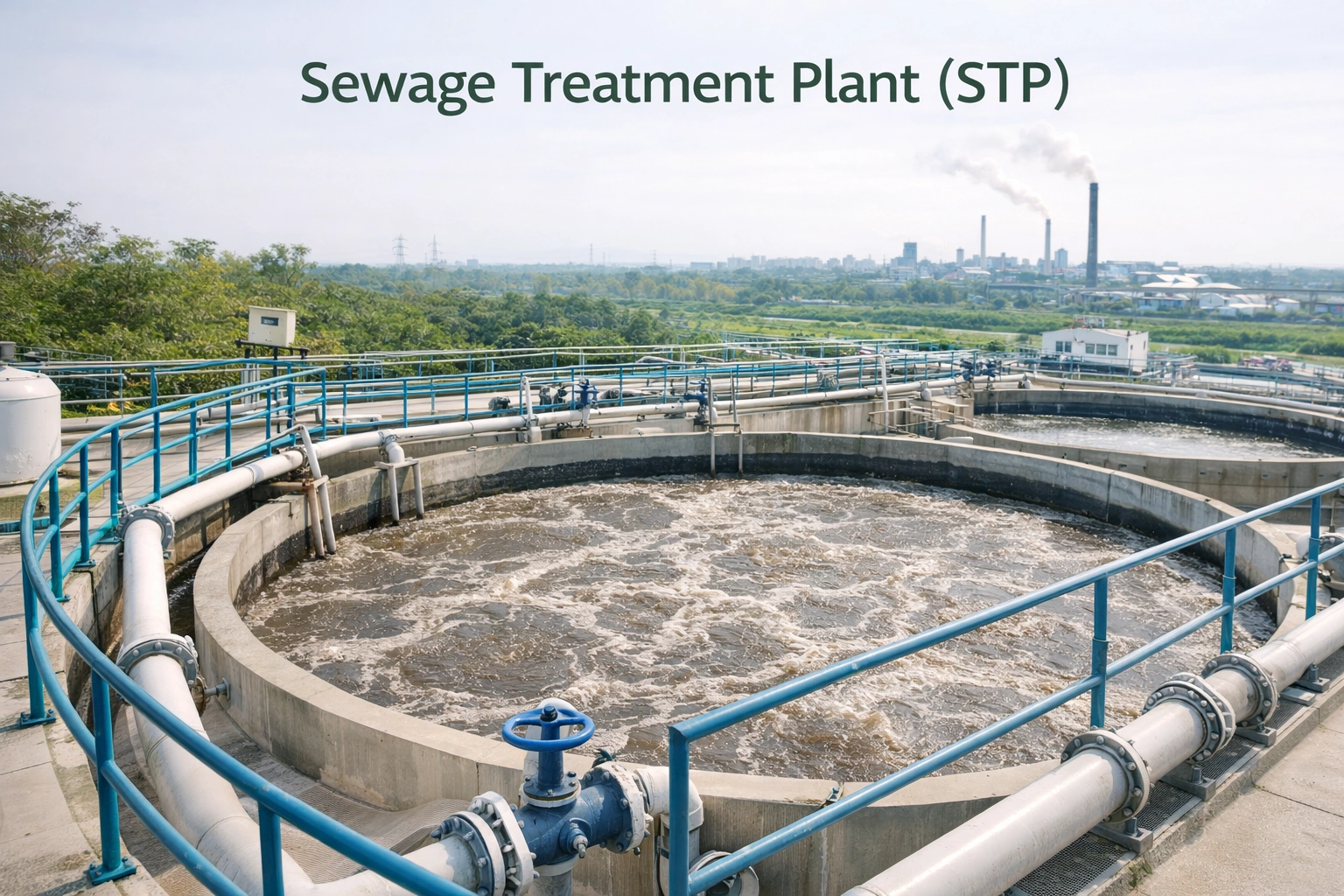
Wastewater Engineering Services for Sewage Treatment Plant (STP) in Bangladesh
A Sewage Treatment Plant (STP) processes wastewater from homes and industries to remove contaminants, ensuring clean, treated water is safely returned to the environment or reused. Essential for public health and sustainability.
For top-notch services across Bangladesh—especially in Dhaka, Chittagong, Gazipur, Sylhet, Rangpur, Barisal, Khulna, and beyond—please reach out to us.
Looking for Efficient Wastewater Engineering Solutions?
Sewage Treatment Plant (STP) Process
Sewage Treatment Plant (STP) involves a series of treatment steps to safely treat domestic and municipal wastewater before discharge or reuse.
– Screening
Removal of large debris, plastics, and solid waste from incoming sewage.
– Primary Treatment
Sedimentation process to remove floating and settleable solids.
– Secondary Treatment
Biological treatment using microorganisms to break down organic matter.
– Tertiary Treatment
Advanced purification to remove nutrients, chemicals, and remaining impurities.
– Disinfection
Elimination of harmful pathogens using chlorine, UV, or other methods.
– Sludge Treatment
Processing of sludge through stabilization, dewatering, and safe disposal or reuse.
Key Components of STP
A Sewage Treatment Plant (STP) typically includes:
- Inlet works (screens and grit chambers)
- Primary clarifiers for sedimentation
- Aeration tanks for biological treatment
- Secondary clarifiers for sludge separation
- Tertiary treatment units (filters/chemical systems)
- Disinfection units
- Sludge handling and processing facilities
- Effluent discharge system
Why STP is Required
Sewage Treatment Plant (STP) is essential for:
- Regulatory Compliance
Meeting environmental laws and wastewater discharge standards - Public Health Protection
Preventing contamination and the spread of waterborne diseases - Urban Development Support
Managing wastewater efficiently in growing cities and industries - Sustainable Practices
Promoting water reuse and environmentally responsible waste management