
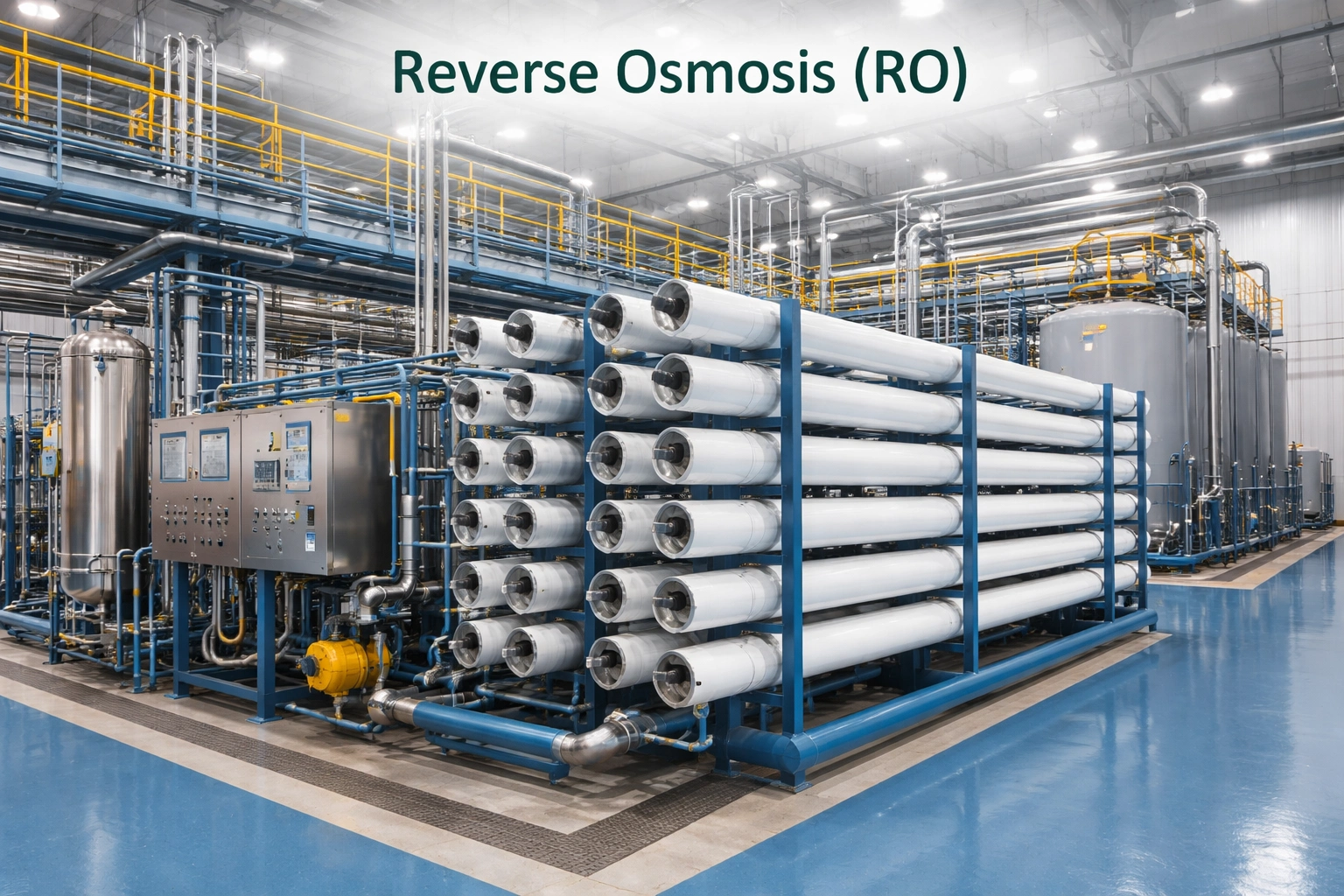
Reverse Osmosis (RO)
Consulting Firm Specializing in Reverse Osmosis (RO) in Bangladesh.
Are you looking for an Environmental Impact Assessment (EIA) consulting firm in Bangladesh? National Green Environment is one of the leading EIA consultancy firms based in Dhaka. You’ve come to the right place! We’re here to assist you with all your environmental assessment needs.
For top-notch consultancy services across Bangladesh—especially in Dhaka, Chittagong, Gazipur, Sylhet, Rangpur, Barisal, Khulna, and beyond—please reach out to us.
Do You Need Reverse Osmosis (RO)?
Here are the main steps involved in an Reverse Osmosis (RO):
Pre-Treatment:
- Screening: Removes large particles and debris from the feed water to protect the RO membrane.
- Coagulation and Flocculation: Chemicals are added to the water to aggregate fine particles and form larger flocs, which are then removed by sedimentation or filtration.
- Sedimentation: Allows particles to settle out of the water before it reaches the RO membrane.
- Filtration: Further removes suspended solids and particulate matter using media filters or cartridge filters.
Chemical Conditioning:
- pH Adjustment: Adjusts the pH of the feed water to optimize membrane performance and prevent scaling or fouling. This may involve adding acids or bases.
- Antiscalant Addition: Adds chemicals that prevent the formation of scale (mineral deposits) on the membrane.
High-Pressure Pumping:
- Pressurization: Uses a high-pressure pump to apply pressure to the feed water. This pressure is necessary to overcome the natural osmotic pressure and force the water through the RO membrane.
Membrane Filtration:
- RO Membrane: The pressurized water is forced through the RO membrane, which allows water molecules to pass through while rejecting contaminants such as dissolved salts, organic compounds, and microorganisms.
- Concentration and Permeate: The RO membrane separates the feed water into two streams:
- Permeate (Product Water): The purified water that passes through the membrane.
- Concentrate (Brine): The concentrated solution containing the rejected contaminants that do not pass through the membrane.
Post-Treatment:
- Polishing: Additional treatment processes to further improve water quality. This may include:
- Activated Carbon Filtration: Removes any remaining chlorine, odors, or taste.
- UV Treatment: Uses ultraviolet light to disinfect the water and destroy any remaining microorganisms.
- pH Adjustment: Final adjustment of the pH to ensure the water is suitable for its intended use.
- Polishing: Additional treatment processes to further improve water quality. This may include:
Storage and Distribution:
- Storage Tank: The treated water is stored in a clean tank or reservoir until needed.
- Distribution: The purified water is distributed to the end-users through a system of pipes or delivery mechanisms.
Cleaning and Maintenance:
- Membrane Cleaning: Regular cleaning of the RO membranes to remove any fouling or scaling that occurs during operation. This is typically done using cleaning agents and specific cleaning protocols.
- System Maintenance: Routine inspection and maintenance of system components, including pumps, valves, and filters, to ensure reliable operation and performance.
Monitoring and Control:
- Instrumentation: Monitoring of key parameters such as pressure, flow rates, and water quality (e.g., TDS, conductivity) to ensure optimal performance and detect any issues.
- Control Systems: Automated controls to adjust operating conditions, manage cleaning cycles, and handle alarms or faults.
AnReverse Osmosis (RO) typically includes the following components:
Feed Water Source:
- Water Inlet: The entry point for the water that will be treated by the RO system. This could be from a municipal supply, well, or other water sources.
Pre-Treatment Components:
- Screening/Pre-Filtration: Filters that remove large particles, sediments, and debris from the feed water to protect the RO membranes from clogging or damage.
- Coagulation and Flocculation Units: Systems that add chemicals to aggregate and remove fine particles and colloids.
- Activated Carbon Filters: Remove chlorine, chloramines, and organic compounds that can damage the RO membranes and affect taste and odor.
High-Pressure Pump:
- Pressurization Unit: A pump that applies high pressure to the feed water to overcome the osmotic pressure and force water through the RO membrane. This is crucial for the effective operation of the RO system.
Reverse Osmosis Membrane:
- RO Membrane Modules: Semi-permeable membranes that separate contaminants from the water. The membranes allow water molecules to pass through while rejecting impurities such as salts, organic compounds, and microorganisms.
Membrane Housing:
- Membrane Casing: The protective enclosure that holds and supports the RO membranes. It is designed to withstand the high pressure applied during the RO process.
Concentrate and Permeate Streams:
- Concentrate (Brine) Outlet: The stream of water that contains the concentrated contaminants rejected by the RO membrane. This is typically directed to a drain or further treatment.
- Permeate (Product Water) Outlet: The stream of purified water that passes through the RO membrane and is collected for use.
Post-Treatment Components:
- Polishing Filters: Additional filters, such as activated carbon or polishing cartridges, to further refine the water and remove any remaining contaminants or odors.
- UV Sterilizers: Ultraviolet lamps that provide disinfection to kill any remaining microorganisms in the treated water.
Storage Tank:
- Storage Reservoir: A tank where the purified water is stored before distribution or use. This is important for ensuring a steady supply of clean water.
Distribution System:
- Piping and Valves: The system of pipes and valves that transport the purified water from the storage tank to the point of use.
Monitoring and Control Systems:
- Instrumentation: Sensors and gauges that monitor key parameters such as pressure, flow rate, and water quality (e.g., total dissolved solids (TDS), conductivity).
- Control Panels: Automated systems that manage the operation of the RO system, including adjusting pressures, flow rates, and cleaning cycles.
Cleaning and Maintenance Systems:
- Cleaning Units: Equipment and solutions for cleaning the RO membranes to remove fouling and scaling. This is essential for maintaining membrane performance and longevity.
- Maintenance Tools: Tools and procedures for routine maintenance and troubleshooting of the RO system.
Reverse Osmosis (RO) is required by:
Municipal Water Treatment:
- Drinking Water Production: RO is used to produce high-quality drinking water by removing contaminants and impurities from municipal water supplies.
- Desalination: RO is a key technology in desalination plants to convert seawater or brackish water into potable water, especially in regions with limited freshwater resources.
Industrial Applications:
- Process Water: Industries requiring high-purity water for manufacturing processes, such as electronics, pharmaceuticals, and food and beverage production, often use RO to ensure water quality and prevent contamination.
- Cooling Systems: RO-treated water is used in cooling towers and other industrial cooling systems to reduce scaling and corrosion.
Commercial Applications:
- Hotels and Restaurants: RO systems are used to provide purified water for drinking, cooking, and ice-making in commercial establishments.
- Bottled Water Industry: Bottled water companies use RO to purify water before packaging to ensure it meets safety and quality standards.
Residential Use:
- Home Water Purification: RO systems are installed in residential settings to provide clean drinking water by removing impurities and contaminants from tap water.
- Point-of-Use Systems: RO systems are commonly used in under-sink or countertop units in homes to ensure high-quality drinking and cooking water.
Healthcare Facilities:
- Dialysis: RO is used to produce ultrapure water for dialysis machines, which is crucial for patient safety and treatment effectiveness.
- Laboratories: RO-treated water is used in labs for experiments and processes that require high-purity water to prevent interference or contamination.
Environmental and Wastewater Management:
- Wastewater Reuse: RO systems are used to treat and recycle wastewater in industrial processes or municipal systems, helping to conserve water and reduce environmental impact.
- Zero Liquid Discharge (ZLD): In ZLD systems, RO is used to concentrate wastewater and recover water for reuse, minimizing liquid waste discharge.
Regulatory and Compliance Requirements:
- Water Quality Standards: Compliance with regulatory standards for water quality often necessitates the use of RO to meet stringent requirements for contaminants and purity.
- Health and Safety Regulations: RO is sometimes mandated by health and safety regulations to ensure water used in sensitive applications meets high-quality standards.