
Initial Environmental Examination (IEE)
Consulting Firm Specializing in Initial Environmental Examination (IEE) in Bangladesh.
Are you looking for an Initial Environmental Examination (IEE) consulting firm in Bangladesh? National Green Environment is one of the leading EIA consultancy firms based in Mohammadpur, Dhaka. You’ve come to the right place! We’re here to assist you with all your environmental assessment needs.
For top-notch consultancy services across Bangladesh—especially in Dhaka, Chittagong, Gazipur, Sylhet, Rangpur, Barisal, Khulna, and beyond—please reach out to us.
Do You Need Professional Environmental Consulting Services?
Initial Environmental Examination (IEE) Service
Initial Environmental Examination (IEE) helps identify possible environmental impacts at an early stage of your project. It ensures your project follows environmental rules and avoids future risks.
We provide complete IEE support to help you plan your project safely and get necessary approvals.
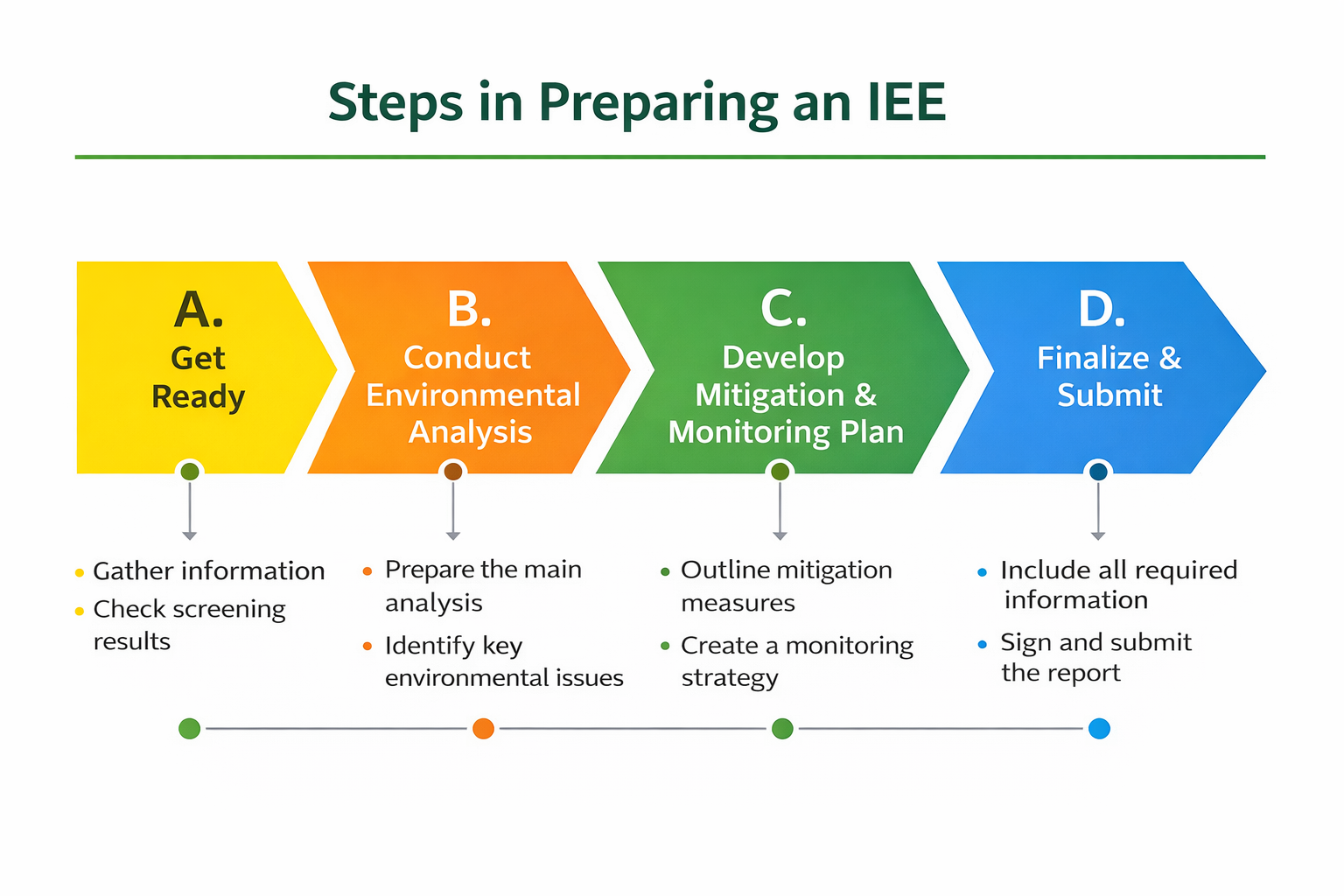
Our IEE Process
– Project Screening
We check whether your project requires an IEE based on its type and impact.
– Scoping
We identify the key environmental issues that need attention.
– Initial Assessment
We conduct a basic study to understand possible environmental impacts.
– Impact Identification
We analyze how your project may affect air, water, soil, and surrounding areas.
– Mitigation Planning
We suggest practical solutions to reduce or avoid negative impacts.
– Consultation and Review
We communicate with stakeholders and review all findings.
– Documentation
We prepare a complete IEE report with all required details.
– Approval Support
We assist in submitting the report to authorities for approval.
– Monitoring Plan
We provide guidelines to monitor environmental conditions during the project.
What Your IEE Report Will Include
- Project overview and description
- Environmental condition of the project area
- Screening and scoping results
- Identification of possible impacts
- Mitigation measures
- Stakeholder consultation details
- Legal and regulatory requirements
- Environmental Management Plan (EMP)
- Monitoring and follow-up plan
- Final report for approval
Who Requires IEE
IEE is required by:
- Regulatory authorities for environmental clearance
- Project developers for early impact assessment
- Financial institutions for funding approval
- International organizations (World Bank, etc.)
- Government agencies for compliance
- Certification bodies for environmental standards
- Stakeholders and local communities
Why Choose Us
- Simple and clear documentation
- Full compliance with environmental regulations
- Fast and reliable service
- Support from planning to approval
Get Started
Let us help you complete your Initial Environmental Examination (IEE) smoothly and professionally.